Delicata squash (Cucurbita pepo) grows well in Missouri’s Zone 6b-7a and is prized for its sweet, creamy flesh and manageable vine size. Unlike many winter squash varieties, Delicata does not require curing and can be eaten fresh from the garden.
1. Choose the Right Variety
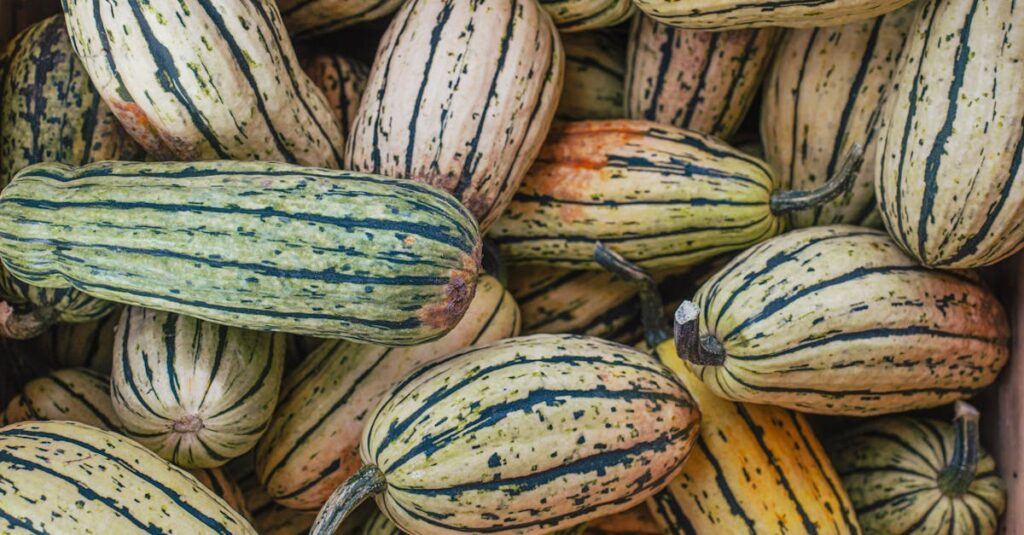
- Variety Selection: Delicata squash comes in several variations, but the most common and well-known is the ‘Delicata’ variety. It’s typically known for its cream-colored skin with green stripes and a sweet, nutty flavor. A couple of other options include:
- ‘Sugar Loaf’: A slightly sweeter variety with a small, compact shape.
- ‘Honey Boat’: A hybrid delicata squash with a deep golden color and improved disease resistance.
- Disease Resistance: Opt for varieties with resistance to common squash diseases, such as powdery mildew and bacterial wilt, which are important for Missouri’s humid summer conditions.
2. Planting Time
- Soil Temperature: Delicata squash is a warm-season crop, so it requires warm soil to germinate. Plant seeds when the soil temperature has reached 60°F or higher, typically by mid-late May to early June in Missouri.
- Frost-Free Period: Delicata squash requires 70–100 frost-free days for the full growing cycle. In Missouri, plant after the last expected frost (around mid-April) and aim to harvest before the first frost (around mid-October in Zone 6b-7a).
3. Site Preparation
- Soil Requirements: Delicata squash thrives in well-drained, fertile soil with a pH of 6.0–7.5. Enrich your soil by adding compost or well-rotted manure to improve fertility, soil structure, and drainage.
- Soil Depth: Ensure that the soil is loosened to a depth of 8–12 inches to accommodate the deep-growing roots of the squash plant.
- Location: Choose a full-sun location that gets at least 6–8 hours of direct sunlight per day. Squash plants need full sun to grow properly and produce fruit.
- Spacing: Delicata squash vines need ample space to spread out. Space plants about 24–36 inches apart in rows that are 48–60 inches apart. If space is limited, consider planting on mounds or raised beds.
4. Planting
- Direct Sowing: Delicata squash is best direct-sown into the garden as it establishes itself more easily this way.
- Seed Depth: Plant seeds about 1 inch deep into the soil.
- Spacing: Plant 2–3 seeds per hole and thin the seedlings to the strongest plant once they have sprouted. This ensures the plants have enough space and aren’t competing for nutrients.
- Mounding: Create small mounds of soil to plant your squash on (about 4–6 inches high). Mounding promotes good drainage and helps warm the soil for better seed germination.
- Pollination: Like most squash, Delicata has male and female flowers. Ensure that you have pollinators like bees around, or hand-pollinate by transferring pollen from the male flowers to the female flowers if needed.
5. Watering and Maintenance
- Watering Needs: Delicata squash needs consistent watering to thrive, especially during dry periods. Water deeply at the base of the plant, ensuring that the soil remains moist but not waterlogged.
- Watering Method: Use drip irrigation or soaker hoses to keep water off the foliage and reduce the risk of fungal diseases like powdery mildew. Aim for about 1 inch of water per week.
- Weeding: Keep the area around your plants free of weeds, especially while the plants are young. Mulch around the plants with straw or grass clippings to help suppress weeds, conserve moisture, and keep soil temperatures steady.
- Fertilization: Apply a balanced fertilizer (like a 10-10-10) or compost when planting. Once the plants are actively growing and producing fruit, side-dress with organic compost to encourage healthy fruit development.
- Mulching: Use mulch to help keep the soil cool and retain moisture. Mulch will also help prevent weeds from taking over the growing space.
6. Growth and Flowering
- Vine Growth: Delicata squash is a vining plant, and once it’s established, it will spread out horizontally. It’s important to allow plenty of space for the vines to grow or consider using vertical gardening techniques like trellising (if space is limited).
- Flowering: The plants will produce male flowers first, followed by female flowers that will eventually turn into fruit. Female flowers are usually located near the base of the plant, and they require pollination to develop into fruit.
- Pollination: If you don’t have enough bees or pollinators, you may need to hand-pollinate by transferring pollen from male flowers to female flowers using a small brush.
7. Pest and Disease Management
- Common Pests: Watch out for squash bugs, cucumber beetles, and aphids, all of which can damage plants and reduce fruit yield. You can manage these pests using organic insecticidal soap, neem oil, or by introducing beneficial insects like ladybugs.
- Powdery Mildew: Powdery mildew is a common fungal disease on squash plants, especially in Missouri’s humid summers. To control this, ensure proper air circulation by spacing your plants adequately, water at the base, and use organic fungicides or natural remedies such as baking soda.
- Squash Vine Borer: The squash vine borer is a major pest. To prevent this, use row covers early in the season to protect your plants, and inspect for damage regularly. If you spot any vine borer larvae, remove affected vines promptly to prevent further damage.
8. Harvesting
- Timing: Delicata squash is typically ready to harvest in 80–100 days from planting. In Missouri, this usually means harvesting by mid-late September to early October, before the first frost hits.
- Signs of Maturity: Harvest when the skin is hard, and the squash has turned a golden yellow or cream color. The rind should be tough enough that it can’t be easily punctured with your fingernail.
- How to Harvest: Use a sharp knife or pruning shears to cut the squash from the vine, leaving about 2 inches of stem attached to the fruit. Be gentle when handling the squash to avoid bruising.
- Curing: After harvesting, cure your delicata squash in a warm, dry area (80–85°F) for about 10–14 days to help harden the skin and extend storage life.
9. Storage
- Storage Conditions: Once cured, store Delicata squash in a cool (50–55°F), dry location with good ventilation. A root cellar or basement is ideal.
- Shelf Life: When stored properly, Delicata squash can last 3–6 months.
- Avoid Refrigeration: Do not store squash in the refrigerator, as cold temperatures can cause it to spoil.
10. Considerations for Missouri’s Climate
- Humidity and Rain: Missouri’s humid summers can lead to fungal diseases. Monitor your plants regularly for early signs of disease, and use organic fungicides as necessary. Good airflow and spacing are critical.
- Frost Risk: Because Delicata squash is sensitive to frost, make sure to harvest before the first frost, which typically occurs in mid-October in your region. Consider using row covers to extend your growing season if necessary.
- Heat Stress: Squash is generally heat-tolerant, but extreme temperatures above 90°F can stress the plant. Keep the soil consistently moist during periods of high heat.
11. Challenges
- Pests: Squash bugs and vine borers can cause significant damage, especially in the later stages of growth. Regular inspection and early treatment will help keep these pests under control.
- Disease Pressure: Powdery mildew can be a concern in humid conditions. Regularly monitor your plants and use preventive measures like spacing, watering at the base, and applying organic treatments.
With these guidelines, you can enjoy a successful harvest of Delicata squash in Missouri. This squash is a great addition to your garden and kitchen, offering a sweet, creamy texture perfect for baking, roasting, or even stuffing.