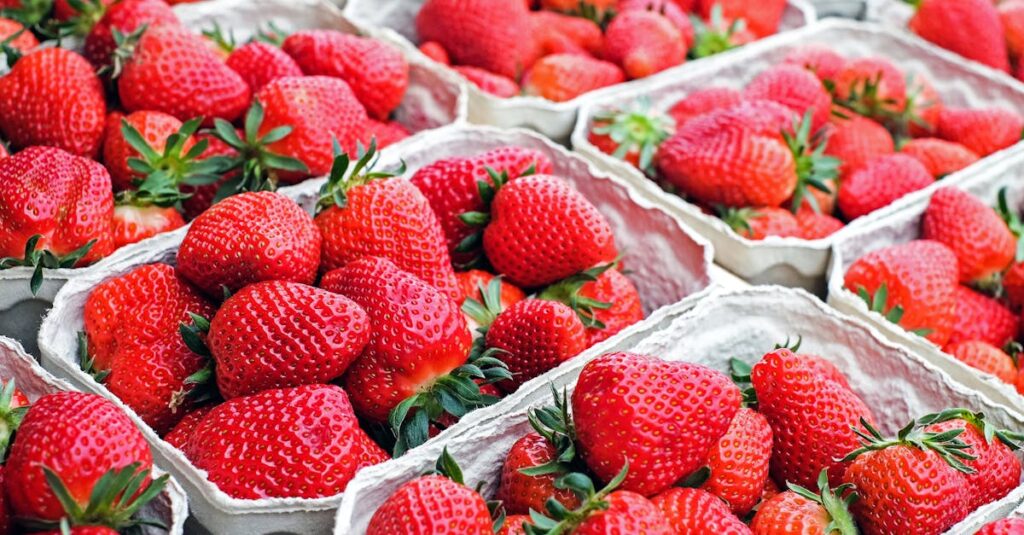
Strawberries (Fragaria × ananassa) are a productive and popular fruit for Missouri gardens in Zone 6b-7a. They are available in three main types: June-bearing, ever-bearing, and day-neutral, each with different production patterns and management needs. This guide covers variety selection, planting, care, and harvesting.
1. Choose the Right Variety
- June-Bearing Strawberries: These varieties produce one large harvest in early to mid-summer, typically in June. They are well-suited for Missouri’s climate.
- ‘Allstar’: Known for its excellent flavor and large fruit size. It’s hardy and productive.
- ‘Earliglow’: One of the earliest varieties, producing small but very sweet berries.
- ‘Cavendish’: Another excellent June-bearer, producing large, firm berries.
- Ever-Bearing Strawberries: These produce two smaller harvests, one in early summer and another in fall. They are ideal if you want strawberries over a longer season.
- ‘Quinault’: A reliable ever-bearing variety that produces sweet berries throughout the season.
- ‘Tri-Star’: Produces fruit in early summer and again in the fall, ideal for home gardens.
- Day-Neutral Strawberries: These varieties produce fruit throughout the growing season, typically from late spring to early fall, regardless of day length. However, they may not be as hardy as other types.
- ‘Seascape’: Known for producing large berries with great flavor throughout the growing season.
- ‘Albion’: Day-neutral variety with consistent fruit production from early summer to fall.
2. Planting Time
- Best Planting Time: Spring is the best time to plant strawberries in Missouri. Ideally, plant bare-root or potted transplants in early spring, around late March to early April, after the last frost date.
- Fall Planting: Strawberries can also be planted in fall (late September to early October), which allows the plants to establish roots before winter. This is more common with ever-bearing or day-neutral varieties.
3. Site Preparation
- Soil Requirements: Strawberries prefer well-drained, fertile soil that is rich in organic matter. The soil pH should be 5.5 to 6.5. To prepare your soil:
- Amend with compost or well-rotted manure to improve fertility and drainage.
- If your soil is too acidic, add lime to raise the pH. If it’s too alkaline, incorporate sulfur to lower the pH.
- Location: Choose a full-sun location that gets 6-8 hours of sunlight per day. Strawberries need plenty of sunlight to produce a good crop.
- Soil Depth: Prepare the planting site with a soil depth of at least 6–8 inches. Raised beds are ideal for improving drainage and ensuring good root growth.
- Spacing: Space strawberry plants about 12–18 inches apart in rows that are 3–4 feet apart. This provides ample room for spreading and air circulation.
4. Planting
- Planting Depth: When planting bare-root strawberries, place the roots in the soil so that the crown (where the roots meet the leaves) is level with the soil surface. Be careful not to bury the crown, as it can rot. If planting in pots, the crown should be slightly above the soil line.
- Planting Method:
- Row Planting: If planting in rows, create shallow trenches and plant the strawberry roots, spacing them appropriately.
- Matted Row System: This is the most common method for June-bearing strawberries. Space plants about 12–18 inches apart in rows, allowing the runners to spread and create a matted row over time.
- Hill System: Ideal for ever-bearing or day-neutral varieties, this method involves planting individual plants in small mounds of soil with 18–24 inches between each plant.
- Watering: Water well immediately after planting to settle the soil around the roots. Strawberries need consistently moist soil, especially during the establishment period. Avoid overhead watering, as wetting the foliage can increase the risk of fungal diseases. Drip irrigation or soaker hoses work best.
5. Watering and Maintenance
- Watering Needs: Strawberries need about 1 to 1.5 inches of water per week during the growing season. Keep the soil evenly moist, especially during fruit development.
- Avoid waterlogging, as it can lead to root rot.
- Watering in the early morning is best to prevent fungal diseases.
- Fertilization: Fertilize your strawberries in early spring, when they start to show new growth. Use a balanced, slow-release fertilizer or one formulated for fruiting plants. A fertilizer with higher potassium and phosphorus is ideal to promote fruiting.
- Avoid high-nitrogen fertilizers, as they encourage excessive leaf growth at the expense of fruit production.
- Mulching: Mulch with straw or shredded leaves around your strawberry plants to:
- Conserve moisture
- Keep the fruit clean (it helps prevent contact with the soil, reducing the chance of rot)
- Suppress weeds
- Keep the roots cool during summer
- Weeding: Regularly remove weeds around strawberry plants to reduce competition for nutrients and water.
6. Growth and Fruit Production
- Early Growth: After planting, strawberries will produce leaves and runners (long stems that can root into the soil). These runners help propagate new plants and should be allowed to grow and spread.
- Flowering: Strawberry plants typically flower in late spring to early summer. The flowers are small and white with yellow centers. You may need to remove the first set of flowers to encourage better root and plant development, especially in the first year.
- Fruit Development: As flowers are pollinated, they will develop into strawberries. The fruit will grow, ripen, and change from green to red (depending on the variety). Allow fruit to ripen fully before picking for the best flavor.
7. Pest and Disease Management
- Common Pests:
- Slugs and Snails: These pests can damage young plants and fruit. Use beer traps or diatomaceous earth to deter them.
- Aphids: These tiny insects can damage plants and spread diseases. Control them with insecticidal soap or neem oil.
- Spider Mites: Mites can cause the leaves to turn yellow. Use miticides or neem oil to control infestations.
- Diseases:
- Powdery Mildew: This fungal disease creates white, powdery spots on the leaves. Increase air circulation, avoid overhead watering, and remove affected leaves.
- Gray Mold (Botrytis): This is a common problem, especially in humid conditions, causing gray, fuzzy mold on fruit. Ensure proper spacing and use fungicides if necessary.
- Leaf Spot Diseases: Remove infected leaves promptly and apply fungicides as a preventative measure.
- Verticillium Wilt: This soil-borne fungus can cause wilting and yellowing of leaves. Rotate strawberry crops every few years to prevent the build-up of soil pathogens.
8. Harvesting
- Timing: Harvest strawberries when they are fully red and firm. For June-bearing varieties, this is typically in early to mid-summer. Ever-bearing and day-neutral varieties will yield fruit throughout the growing season, often from late spring to fall.
- How to Harvest: Gently pick strawberries by pinching the stem above the fruit, being careful not to damage the plant or fruit. Only harvest when the fruit is fully ripe to ensure the best flavor.
- Post-Harvest Care: Once harvested, store strawberries in the refrigerator for 2-3 days. To prolong shelf life, keep them in a shallow container with plenty of airflow.
9. Storage and Preservation
- Fresh Use: Fresh strawberries are best eaten within a few days of harvesting. Store them in the refrigerator, and don’t wash them until you’re ready to eat them.
- Freezing: To preserve strawberries for long-term storage, freeze them. Wash and hull the berries, then freeze them in a single layer on a baking sheet. Once frozen, transfer them to a freezer-safe bag or container.
- Jam and Preserves: Strawberries can be made into jam, jelly, or preserves for longer storage. These can be stored in jars and sealed in a water bath or pressure canner.
10. Considerations for Missouri’s Climate
- Winter Protection: In Missouri’s colder winters (Zone 6b-7a), it’s important to protect strawberry plants during the winter months.
- Mulch heavily with straw, leaves, or pine needles around the base of the plants to protect the roots from freezing temperatures.
- Row covers can also help provide extra protection against cold snaps.
- Spring Growth: As strawberries begin to grow in the spring, remove the mulch to allow the plants to warm up and start producing new growth.
11. Challenges
- Pest Issues: Slugs, snails, and aphids can damage strawberries, particularly when the plants are young. Regular inspection and organic control methods (like diatomaceous earth or neem oil) will help manage pest populations.
- Weather Extremes: Missouri’s hot summers and occasional frosts in early spring can affect strawberry growth. It’s essential to plant after the last frost and provide protection during extreme heat.
By following these guidelines, you can enjoy a bountiful strawberry harvest in Missouri, whether you’re growing June-bearing, ever-bearing, or day-neutral varieties. Whether you choose June-bearing, ever-bearing, or day-neutral varieties, proper care and attention to variety selection will lead to a productive strawberry patch year after year.