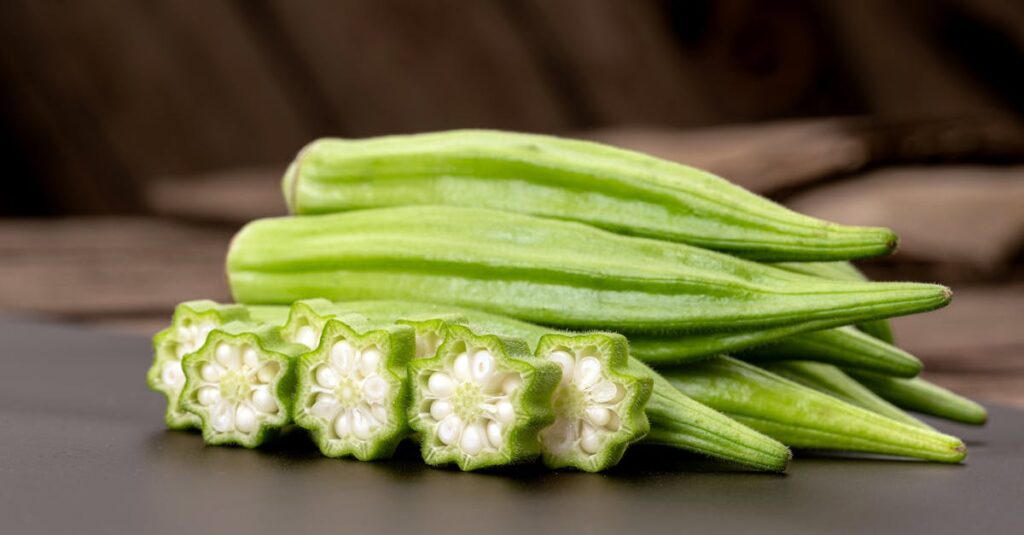
Okra is a heat-loving, drought-tolerant vegetable that thrives in Missouri’s warm summers. It is an excellent choice for Zone 6b-7a, producing tender pods that are great for frying, pickling, and adding to soups and stews. With the right planting and care, you can enjoy a long harvest season.
1. Choose the Right Okra Variety
Variety Selection:
- Clemson Spineless – A popular, high-yielding, spineless variety.
- Jing Orange – Produces red-orange pods with excellent flavor.
- Red Burgundy – Deep red pods that add color to dishes.
- Emerald – Long, smooth, deep-green pods.
- Annie Oakley II – A dwarf variety that matures early.
2. Planting Time
Ideal Temperature:
- Okra thrives in warm temperatures between 75°F–95°F.
- Spring Planting: Direct seed outdoors 2–3 weeks after the last frost (late April to mid-May) when soil temperatures reach at least 65°F–70°F.
- Fall Planting: Okra prefers long, warm seasons and is typically not planted in fall due to Missouri’s early frosts.
Frost-Free Period:
- Okra requires 60–90 frost-free days to produce a steady harvest.
- In Missouri, the growing season lasts from late April to early October.
3. Site Preparation
Soil Requirements:
- Prefers well-drained, fertile soil with a pH of 6.0–7.5.
- Add compost or aged manure before planting to improve soil quality.
Sunlight:
- Requires full sun (at least 8 hours per day) for optimal growth.
Spacing:
- Space plants 12–18 inches apart in rows 3 feet apart to allow room for bushy growth.
4. Planting
Seed Preparation:
- Okra seeds have a hard outer shell; soak them in warm water overnight before planting to speed up germination.
Seed Spacing:
- Sow seeds ½–1 inch deep, spacing them 3 inches apart in rows.
- Thin seedlings to 12–18 inches apart once they reach 4–6 inches tall.
Transplanting:
- Okra can be started indoors 4–6 weeks before transplanting but prefers direct sowing.
- If transplanting, be careful not to disturb the roots, as okra dislikes transplant shock.
5. Watering and Maintenance
Watering Needs:
- Okra is drought-tolerant but produces best with 1–1.5 inches of water per week.
- Water deeply to encourage strong root development.
Irrigation:
- Use drip irrigation or soaker hoses to maintain consistent soil moisture while avoiding wetting the leaves.
Weeding:
- Keep the area weed-free to reduce competition.
- Apply mulch around plants to retain moisture and suppress weeds.
Fertilization:
- Okra is a moderate feeder. Apply a balanced fertilizer (10-10-10) at planting.
- Side-dress with additional nitrogen every 3–4 weeks to support continuous pod production.
6. Growth Stages and Maturity
Vegetative Growth:
- Okra grows quickly once temperatures warm up, developing deep roots and large leaves.
Flowering Stage:
- Plants will produce large, yellow hibiscus-like flowers before forming pods.
Maturity:
- Pods appear 4–6 days after flowering and should be harvested while tender at 3–5 inches long.
- Okra continues to produce until the first frost if harvested regularly.
7. Harvesting
Timing:
- Start harvesting 50–70 days after planting (typically July–October).
- Harvest pods daily or every other day to encourage more production.
Signs of Maturity:
- Pods should be 3–5 inches long and tender.
- Overgrown pods become tough and woody, reducing plant productivity.
Manual Harvesting:
- Use pruning shears or a sharp knife to cut pods from the stem.
- Wear gloves if harvesting a spiny variety, as okra can irritate the skin.
8. Post-Harvest Processing
Storage:
- Store fresh okra in the refrigerator for up to 3–5 days in a paper bag or perforated plastic bag.
- Do not wash until ready to use to prevent slime buildup.
Preservation:
- Okra can be frozen, pickled, or dried for long-term storage.
9. Considerations for Missouri’s Climate
Growing Season Length:
- Missouri’s warm summers provide an ideal growing season for okra.
- Extended hot periods will boost production.
Late-Season Cold:
- Okra is very sensitive to frost. Once temperatures drop below 50°F, growth slows significantly.
- Protect plants with row covers if an early frost threatens the crop.
Pests and Diseases:
- Watch for aphids, stink bugs, and Japanese beetles.
- Hand-pick pests or use organic sprays like neem oil if infestations occur.
- Powdery mildew and fusarium wilt can be prevented by ensuring good airflow and avoiding excessive moisture on the leaves.
10. Challenges
Slow Germination in Cool Soil:
- Okra seeds struggle to germinate in cool soil. Wait until soil reaches 65°F–70°F before planting.
Prickly Pods and Stems:
- Some varieties have spiny pods and stems that can cause skin irritation.
- Choose spineless varieties or wear gloves when harvesting.
Continuous Harvesting Required:
- Pods must be harvested frequently to keep plants productive.
By following these steps, you can successfully grow okra in Missouri’s Zone 6b-7a. With warm temperatures, proper spacing, and consistent harvesting, you’ll enjoy an abundant okra harvest throughout the summer and early fall.
With warm temperatures, proper spacing, and consistent harvesting, okra provides an abundant yield throughout Missouri’s summer and early fall.