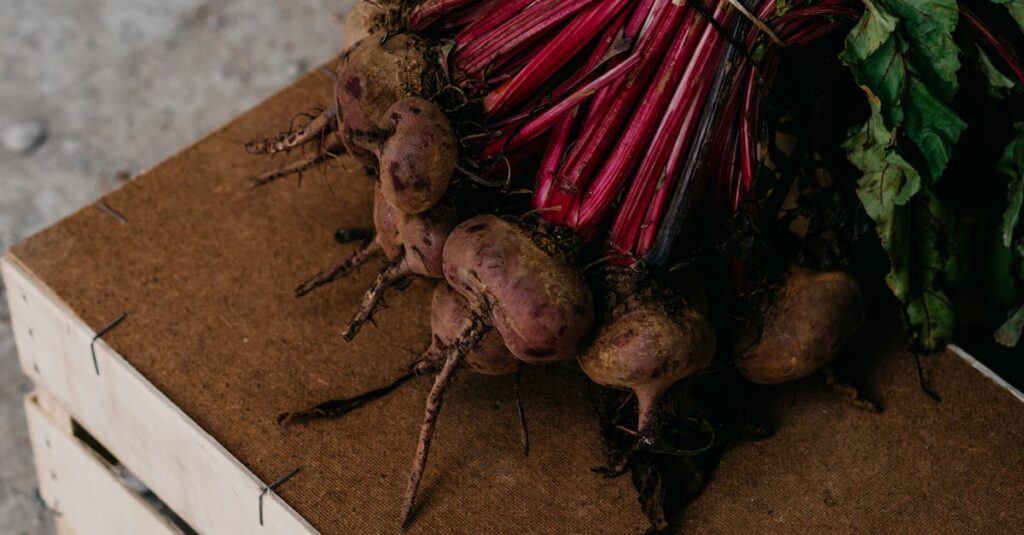
Beets are a versatile, cool-season root vegetable that thrive in Missouri’s climate. They grow well in both spring and fall, producing tender greens and sweet, earthy roots. Beets are easy to grow and require minimal maintenance, making them a great addition to any garden.
1. Choose the Right Beet Variety
Variety Selection:
- Detroit Dark Red – A classic variety with smooth, deep red roots.
- Golden Beet – Produces bright yellow roots with a milder, less earthy flavor.
- Chioggia (Candy Cane Beet) – Has striking red-and-white rings inside and a sweet taste.
- Cylindra – A long, cylindrical beet that is easy to slice and has a smooth texture.
- Baby Beets (Little Ball, Mini Ball) – Fast-growing, perfect for small spaces and early harvests.
2. Planting Time
Ideal Temperature:
- Beets grow best in cool weather between 50°F–75°F.
- They require 45–65 days to mature.
Spring Planting:
- Direct sow seeds 2–4 weeks before the last frost (early to mid-March).
- Succession plant every 2–3 weeks for a continuous harvest through early summer.
Fall Planting:
- Direct sow seeds in late August to early September for a fall harvest.
- Beets can tolerate light frost and even improve in flavor after a cold snap.
Frost Tolerance:
- Beets withstand light frost but should be harvested before a hard freeze (below 25°F).
- For extended harvests, apply mulch to insulate roots.
3. Site Preparation
Soil Requirements:
- Prefers loose, well-drained soil rich in organic matter.
- Soil pH should be between 6.0–7.0.
- Avoid rocky or compacted soil, which can cause misshapen roots.
Sunlight:
- Requires full sun to partial shade (at least 6 hours per day).
Spacing:
- Sow seeds ½ inch deep, spacing them 1–2 inches apart.
- Thin seedlings to 3–4 inches apart once they sprout.
- Rows should be 12–18 inches apart.
4. Planting
Seed Preparation:
- Soak seeds in warm water for 12–24 hours before planting to improve germination.
Direct Sowing:
- Beets do not transplant well, so direct sow them in the garden.
- Plant seeds in moist soil to encourage strong sprouting.
Thinning:
- Beet seeds produce multiple seedlings per seed cluster.
- Thin to one plant per cluster when seedlings reach 2–3 inches tall.
- Eat the thinnings as microgreens!
5. Watering and Maintenance
Watering Needs:
- Beets need 1 inch of water per week, especially in dry weather.
- Consistent moisture prevents woody or tough roots.
Irrigation:
- Use drip irrigation or soaker hoses to avoid washing away seeds.
Weeding:
- Keep rows weed-free, as beets compete poorly with weeds.
- Apply mulch to suppress weeds and retain moisture.
Fertilization:
- Avoid high nitrogen fertilizers, which encourage leaf growth at the expense of roots.
- Apply balanced fertilizer (10-10-10) at planting and side-dress with potassium if needed.
6. Growth Stages and Maturity
Germination:
- Beets sprout in 5–10 days, but may take longer in cold soil.
Leaf Growth:
- The leafy tops develop first and can be harvested early as beet greens.
Root Development:
- Roots begin forming around 30 days after planting.
Maturity:
- Beets are ready to harvest in 45–65 days, depending on the variety.
7. Harvesting
Timing:
- Begin harvesting when beets reach 1–3 inches in diameter.
- Larger beets can become tough and woody if left too long.
Signs of Maturity:
- Round, firm roots protruding slightly above the soil line.
- Leaves remain healthy and vibrant.
Manual Harvesting:
- Loosen the soil with a garden fork before pulling up beets.
- Cut off the greens 1–2 inches above the root to prevent bleeding.
8. Post-Harvest Processing
Storage:
- Store fresh beets in the refrigerator for up to 2 weeks.
- For long-term storage, keep unwashed beets in damp sand or sawdust in a cool, dark place.
Preservation:
- Beets can be pickled, canned, frozen, or dehydrated.
- Greens can be stored like spinach or chard.
9. Considerations for Missouri’s Climate
Growing Season Length:
- Beets grow well in Missouri’s spring and fall seasons.
- Avoid summer heat, which can cause bolting and poor root formation.
Cold Hardiness:
- Beets tolerate light frost, making them a reliable late-season crop.
- For fall harvests, cover with mulch or row covers to extend growing time.
Pests and Diseases:
- Watch for aphids, flea beetles, and leaf miners.
- Practice crop rotation to prevent soilborne diseases like scab and damping-off.
10. Challenges
Poor Germination in Cold Soil:
- Beets take longer to sprout in cold, wet soil.
- Use row covers or start later in the season for better results.
Bolting in Heat:
- High temperatures (above 80°F) can cause premature bolting.
- Plant in cooler seasons to avoid stress.
Misshapen Roots:
- Compacted soil or overcrowding can lead to irregularly shaped beets.
- Thin seedlings properly and loosen soil before planting.
By following these steps, you can successfully grow beets in Missouri’s Zone 6b-7a. With proper care, you’ll enjoy a steady harvest of flavorful roots and nutritious greens throughout the season.
With proper care, beets provide a steady harvest of flavorful roots and nutritious greens throughout the growing season.