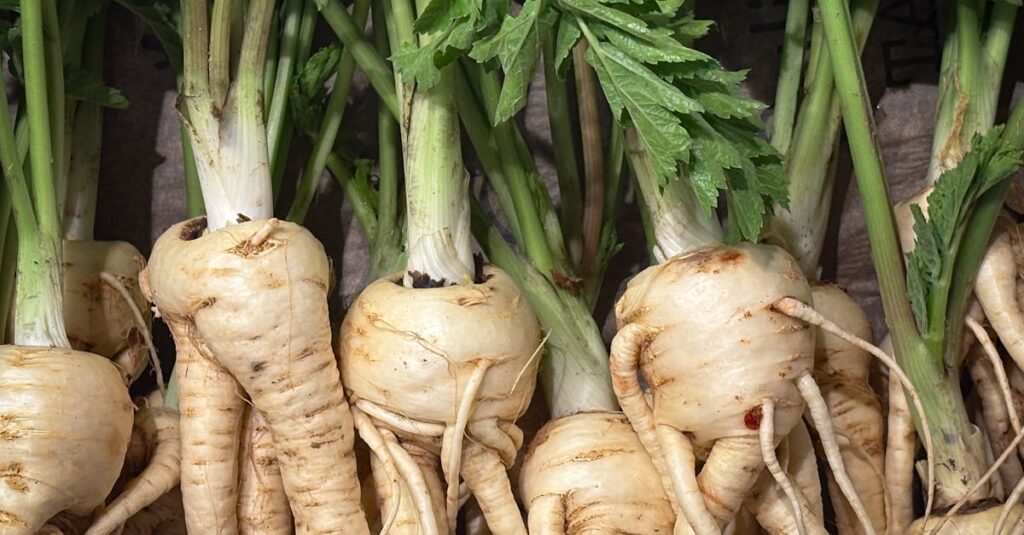
Parsnips are a cool-season root vegetable that thrive in Missouri’s climate, especially with a long growing season. They develop the best flavor after exposure to cold temperatures, making them a great fall or overwintering crop. Although they require patience due to their long germination period, they reward gardeners with a sweet, nutty taste after a frost.
1. Choose the Right Parsnip Variety
Variety Selection:
- Hollow Crown – Classic heirloom variety with long, tapered roots.
- Gladiator – Hybrid variety with strong disease resistance and smooth roots.
- Albion – High-yielding variety with excellent flavor.
- Javelin – Great for winter storage and uniform growth.
2. Planting Time
Ideal Temperature:
- Parsnips grow best in cool weather between 45°F–75°F.
- They require 120–180 days to mature, making early planting essential.
Spring Planting:
- Direct sow 2–4 weeks before the last frost (mid-March to early April).
- Soil temperature must be at least 50°F for germination.
Fall Planting:
- For overwintering, sow seeds in late summer (mid-July to early August).
- Harvest after the first frost to enhance sweetness.
Overwintering:
- Parsnips can be left in the ground through winter and harvested as needed.
- Mulch heavily to prevent freezing.
3. Site Preparation
Soil Requirements:
- Prefers loose, deep, well-drained soil rich in organic matter.
- Soil pH should be 6.0–7.0.
- Avoid rocky or compacted soil, as it can cause forked roots.
Sunlight:
- Requires full sun (6+ hours per day) but tolerates partial shade.
Spacing:
- Space seeds ½ inch apart in rows 12–18 inches apart.
- Thin seedlings to 3–6 inches apart once they reach 2–3 inches tall.
4. Planting
Direct Sowing:
- Plant seeds ¼–½ inch deep in early spring or late summer.
- Germination is slow and may take 2–4 weeks, so be patient.
- Keep soil evenly moist during germination to prevent drying out.
Thinning:
- Thin seedlings to prevent overcrowding and allow proper root development.
- Remove weaker seedlings by cutting them at soil level rather than pulling to avoid disturbing nearby plants.
5. Watering and Maintenance
Watering Needs:
- Parsnips need 1–1.5 inches of water per week.
- Keep the soil consistently moist but not soggy to prevent tough roots.
Irrigation:
- Use drip irrigation or soaker hoses for even moisture.
Weeding:
- Keep the area weed-free, as weeds compete for nutrients.
- Apply mulch to suppress weeds and retain soil moisture.
Fertilization:
- Avoid high-nitrogen fertilizers, as they promote leafy growth over root development.
- Apply a low-nitrogen, high-phosphorus fertilizer (e.g., 5-10-10) before planting.
- Side-dress with compost or bone meal midway through the growing season.
6. Growth Stages and Maturity
Germination:
- Parsnips take 14–28 days to germinate.
- Keep the soil evenly moist to aid slow germination.
Root Development:
- Young plants focus on establishing deep roots.
- Maintain consistent moisture to prevent woody or misshapen roots.
Maturity:
- Parsnips reach full maturity in 120–180 days.
- Cooler temperatures improve root texture and sweetness.
7. Harvesting
Timing:
- Harvest in late fall or early winter, after exposure to frost.
- If overwintering, dig up roots before the ground freezes solid.
Signs of Maturity:
- Roots should be 1–2 inches in diameter and 8–12 inches long.
- Leaves may begin to yellow and die back as they mature.
Manual Harvesting:
- Use a garden fork or spade to loosen the soil before pulling up roots.
- Avoid breaking roots by digging deep and gently lifting them.
8. Post-Harvest Processing
Storage:
- Store fresh parsnips in the refrigerator for up to 2–3 weeks.
- For long-term storage, keep them in damp sand or sawdust in a root cellar.
Preservation:
- Parsnips can be blanched and frozen for longer shelf life.
- Dry or dehydrate slices for use in soups and stews.
9. Considerations for Missouri’s Climate
Growing Season Length:
- Parsnips require a long growing season and are best planted early in spring or late summer.
Cold Hardiness:
- Roots become sweeter after frost but should be harvested before deep winter freezes.
- Use mulch or row covers to extend the season and protect overwintering crops.
Pests and Diseases:
- Carrot rust flies and aphids can be problematic. Use floating row covers to prevent infestations.
- Fungal diseases like leaf blight can occur in humid conditions—avoid overhead watering and ensure good air circulation.
10. Challenges
Slow Germination:
- Parsnip seeds take 2–4 weeks to sprout, requiring constant moisture.
- Use fresh seeds each year, as parsnip seeds lose viability quickly.
Forked or Deformed Roots:
- Caused by rocky soil or excess nitrogen.
- Prepare deep, loose soil and avoid high-nitrogen fertilizers.
Pest Management:
- Carrot rust flies can damage roots. Use row covers or plant near onions and garlic as deterrents.
By following these steps, you can successfully grow parsnips in Missouri’s Zone 6b-7a. With patience and the right conditions, you’ll enjoy a delicious, sweet harvest perfect for roasting, soups, and stews.
With patience and the right growing conditions, parsnips reward gardeners with a sweet, nutty harvest that is ideal for roasting, soups, and stews.