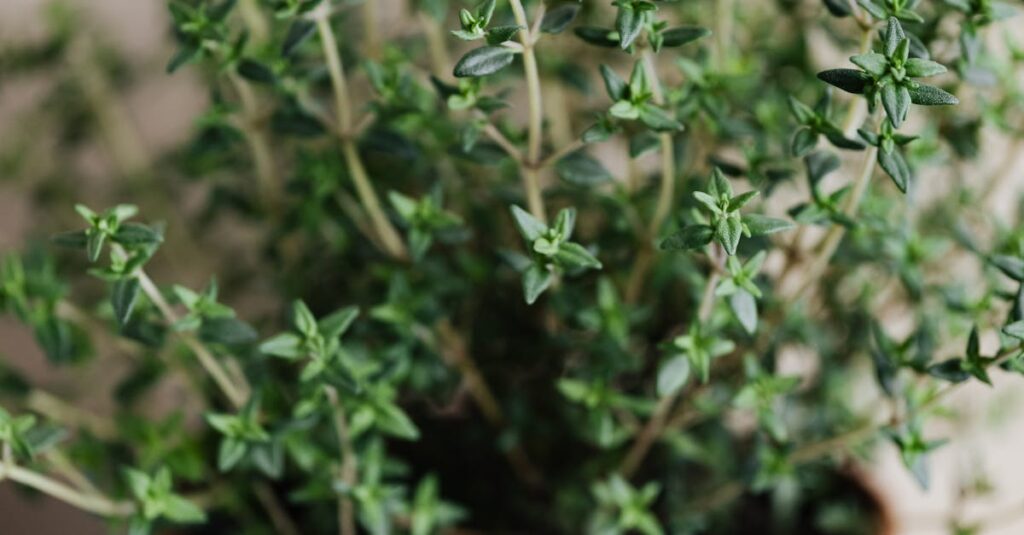
Thyme is a hardy, aromatic perennial herb that thrives in Missouri’s hot summers and mild winters. It’s easy to grow and requires minimal care, making it ideal for both new and experienced gardeners. Thyme is highly valued in cooking for its robust flavor and medicinal properties.
1. Choosing the Right Variety
Popular Thyme Varieties for Missouri:
- English Thyme – The most common culinary variety, known for its strong flavor.
- Lemon Thyme – A variety with a mild lemon scent and flavor, perfect for fish and chicken dishes.
- Caraway Thyme – A thyme variant with a slightly spicy flavor, good for savory dishes.
- Creeping Thyme – A ground-covering variety, also used as an ornamental plant.
- French Thyme – Known for its robust flavor and is commonly used in Mediterranean cuisine.
2. Planting Time
Best Planting Window:
- Indoor Starting: Start thyme seeds indoors 6-8 weeks before the last frost in early to mid-March.
- Outdoor Planting: Transplant seedlings outdoors after the last frost, typically mid to late May, when soil temperatures have warmed up.
Tip: Thyme is cold-hardy and can be planted early in the season, as it can withstand light frost once established.
3. Site Preparation
Sunlight Needs:
- Thyme thrives in full sun, requiring at least 6-8 hours of direct sunlight per day.
- A sunny, well-ventilated spot is ideal to grow healthy thyme in Missouri.
Soil Requirements:
- Well-drained, slightly alkaline soil with a pH between 6.0 and 8.0 is ideal.
- Thyme prefers light, sandy, or loamy soil, so it is important to amend clay-heavy or compacted soil with organic matter like compost to improve drainage.
Tip: Avoid overly rich or overly moist soil, as thyme prefers a dry, well-drained environment.
4. Planting
Spacing:
- Space thyme plants about 12-18 inches apart to ensure proper air circulation and to prevent overcrowding.
- Rows should be spaced about 18-24 inches apart to allow adequate space for growth.
Planting Depth:
- When transplanting, plant thyme at the same depth it was in its container.
- If growing from seed, lightly cover the seeds with a thin layer of soil, as thyme seeds need light to germinate.
Watering Immediately after planting to help the roots establish. Avoid overwatering as thyme does not like wet feet.
5. Watering & Maintenance
Watering Needs:
- Thyme is drought-tolerant once established but requires regular watering during the early growing stages.
- Water deeply and infrequently, ensuring the soil is allowed to dry between waterings. Aim for 1 inch of water per week depending on weather conditions.
- Avoid overhead watering, as it can promote fungal diseases and mildew. Water at the base of the plant to keep the leaves dry.
Pruning:
- Trim thyme regularly to maintain its shape and encourage fresh growth.
- After each harvest, cut the stems back by about a third to keep the plant compact and promote bushier growth.
6. Mulching & Winter Protection
Winter Considerations for Zone 6b-7a:
- Thyme is cold-hardy in Missouri’s Zone 6b-7a. It will survive the winter if the plant is protected with mulch.
- Mulch around the plant with straw or shredded leaves to protect the roots during cold snaps.
Summer Mulching:
- Use organic mulch such as straw or grass clippings to retain moisture during dry periods and suppress weeds.
7. Companion Planting
Good Companions: ✔ Cabbage Family (Brassicas) – Thyme can help repel cabbage moths and aphids, making it a good companion for cabbage, broccoli, and cauliflower. ✔ Carrots – Thyme may improve the flavor of carrots and can deter pests like aphids. ✔ Tomatoes – Thyme can enhance the flavor and growth of tomatoes while repelling harmful insects. ✔ Strawberries – Thyme can deter pests like ants and aphids from strawberry plants.
Avoid planting near: ❌ Fennel – Fennel can inhibit the growth of thyme.
8. Common Problems & Solutions
Pests:
- Aphids – These pests can harm thyme plants. Control them by spraying with insecticidal soap or by using ladybugs.
- Spider Mites – These pests can cause damage by sucking out plant juices. Use neem oil or miticides to control them.
- Whiteflies – Whiteflies can affect thyme. To manage, use yellow sticky traps or insecticidal soap.
Diseases:
- Powdery Mildew – Keep the leaves dry and ensure good air circulation to avoid powdery mildew. Remove infected leaves.
- Root Rot – Prevent root rot by planting thyme in well-drained soil and avoiding overwatering.
9. Harvesting
Harvest Time:
- Thyme can be harvested once the plant has reached about 4-6 inches tall and has developed several sets of leaves.
How to Harvest:
- Snip off the leaves or cut the stems with sharp scissors or pruning shears.
- Harvest regularly to encourage new growth.
- For the best flavor, harvest thyme before it flowers.
Tip: Harvest thyme in the morning, after the dew has dried but before the heat of the day, to get the best flavor.
10. Drying & Storage
Drying Thyme:
- Hang sprigs upside down in a warm, dry, well-ventilated area to dry them.
- Drying time: Typically 1-2 weeks, depending on humidity and air circulation.
Storage:
- Once dried, store thyme in airtight containers in a cool, dark place.
- Dried thyme will keep its flavor for 6-12 months.
Tip: You can also freeze thyme by chopping the leaves and placing them in freezer-safe containers or bags for long-term storage.
11. Missouri-Specific Considerations
Heat & Humidity:
- Thyme thrives in Missouri’s hot summers and dry conditions. However, it may require some shade during extreme heat waves when temperatures exceed 90°F for prolonged periods.
Cold Hardiness:
- Thyme is cold-hardy and can survive the winter in Missouri’s Zone 6b-7a, as long as it is mulched and protected from harsh cold.
12. Summary of Key Tips
✔ Plant in full sun with well-drained, slightly alkaline soil.
✔ Space thyme 12-18 inches apart for proper airflow.
✔ Water deeply but infrequently, letting soil dry between waterings.
✔ Prune regularly to maintain a compact and healthy plant.
✔ Harvest before flowering for the best flavor.
✔ Protect with mulch during winter and during extreme heat.