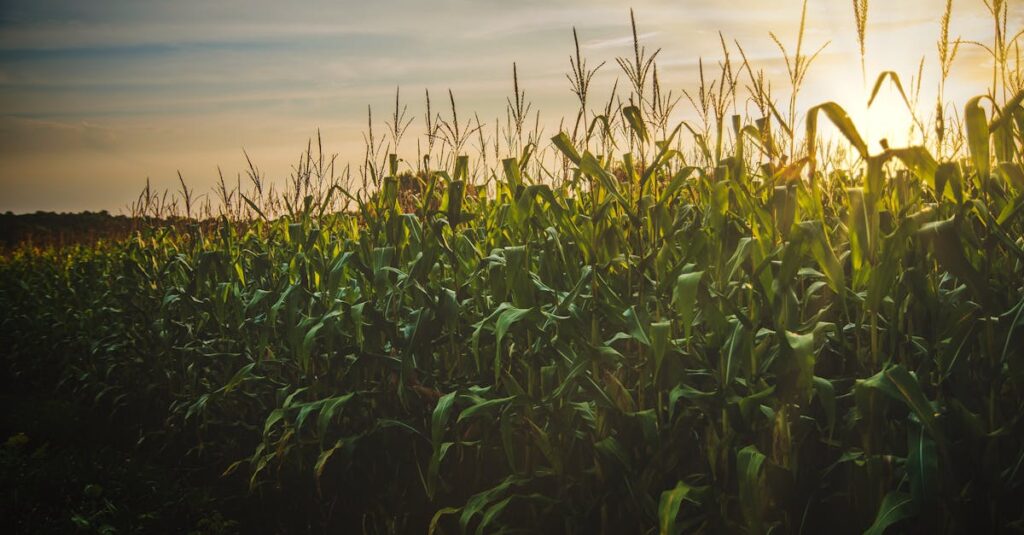
Corn is a warm-season crop that thrives in full sun and fertile soil. Whether you’re growing sweet corn, field corn, or popcorn, proper planting, spacing, and care ensure a bountiful harvest.
1. Choosing the Right Variety
Select a variety based on use and growing conditions:
Sweet Corn (Zea mays var. saccharata) – Fresh eating, grilling, and freezing.
- ‘Silver Queen’ – Classic white corn, late-season, 90–92 days.
- ‘Peaches and Cream’ – Bicolor, sweet, 80–85 days.
- ‘Honey Select’ – Super sweet yellow, 79 days.
Field Corn (Zea mays var. indentata) – Used for livestock feed, cornmeal, or processing.
- ‘Reid’s Yellow Dent’ – Traditional field corn, 85–110 days.
- ‘Pioneer P1197’ – High-yield hybrid, 90–115 days.
Popcorn (Zea mays var. everta) – Small, hard kernels that pop when heated.
- ‘Strawberry Popcorn’ – Red kernels, 100 days.
- ‘Robust 997’ – Large, fluffy popcorn, 103 days.
Avoid cross-pollination: Different corn varieties must be planted at least 250 feet apart or 2+ weeks apart in maturity to maintain flavor and quality.
2. Planting Time
Best Planting Window:
- Spring Planting: After the last frost (Late April to early May).
- Soil Temperature: At least 50–60°F for germination.
Tip: Corn is frost-sensitive. Avoid planting too early, as cold soil delays germination.
3. Site Preparation
Soil Requirements:
- Loamy, well-drained soil with pH 5.8–7.0.
- Enrich with compost or aged manure before planting.
- Rotate crops to prevent soil depletion and disease buildup.
Sunlight Needs:
- Full sun (6–8+ hours daily).
Spacing:
- Rows: 30–36 inches apart for proper air circulation.
- Plants: 8–12 inches apart in rows.
- Block Planting: Instead of long rows, plant in 4×4 or larger blocks to improve pollination.
4. Planting
Direct Sowing Only: Corn does not transplant well.
- Plant Seeds: 1–1.5 inches deep in moist soil.
- Spacing: 2 seeds per hole, thin to 1 strong plant per 8–12 inches after germination.
- Water Immediately after planting to help seeds germinate.
5. Watering & Maintenance
Watering:
- 1–1.5 inches of water per week, especially during silking and ear formation.
- Use drip irrigation or soaker hoses to avoid wetting leaves and reduce disease.
Fertilization:
- At planting: Apply a balanced fertilizer (10-10-10) or compost.
- Midseason: Side-dress with high-nitrogen fertilizer (e.g., 21-0-0 ammonium sulfate) when corn is knee-high.
- Before tasseling: Apply potassium (K) and phosphorus (P) for ear development.
Mulching & Weeding:
- Use straw or grass clippings to retain moisture and suppress weeds.
- Cultivate shallowly to avoid damaging corn roots.
6. Companion Planting
Best Companions:
- Beans – Fix nitrogen, improving soil fertility.
- Squash/Pumpkins – Provide ground cover, suppress weeds.
- Sunflowers – Attract pollinators and deter pests.
Avoid planting near:
- Tomatoes & Peppers – Compete for nutrients.
- Brassicas (Cabbage, Broccoli) – Suppress corn growth.
Traditional “Three Sisters” Method:
- Corn – Provides support for climbing beans.
- Beans – Fix nitrogen for corn and squash.
- Squash – Covers soil, preventing weeds.
7. Growth Stages & Pollination
- Germination: 7–10 days after planting.
- Knee-High Stage: ~4 weeks after planting.
- Tasseling & Pollination: ~8–10 weeks.
- Silking (Ear Formation): 10–12 weeks.
Pollination Tips:
- Corn is wind-pollinated, not insect-pollinated.
- Shake tassels or plant in square blocks for better pollination.
8. Pest & Disease Management
Common Pests:
- Corn Earworms – Use Bt spray, remove infected ears.
- Cutworms – Place collars around seedlings.
- Japanese Beetles – Handpick or use neem oil.
- Raccoons & Deer – Use fencing or deterrents.
Common Diseases:
- Rust & Smut (Fungal Diseases) – Rotate crops, remove infected plants.
- Stewart’s Wilt – Use disease-resistant varieties.
9. Harvesting
Harvest Time: 60–110 days, depending on variety.
Signs of Maturity:
- Silks turn brown & dry but husk is still green.
- Kernels exude milky juice when punctured (for sweet corn).
- Field corn: Harvest when kernels are hard & dented.
How to Harvest:
- Firmly twist and pull down on the ear.
- Harvest early morning for best flavor.
Multiple Plantings: Stagger sowing every 2 weeks for continuous harvest.
10. Storage & Preservation
Short-Term Storage:
- Keep fresh corn in the husk and store in the refrigerator for 3–5 days.
Long-Term Storage:
- Freezing: Blanch 4–5 minutes, cool, and freeze.
- Canning: Use a pressure canner for sweet corn.
- Drying: Husk and air-dry field corn for grinding.
11. Missouri-Specific Considerations
Temperature Sensitivity:
- Late frosts can kill seedlings – always plant after frost risk.
- Missouri summers can stress plants – mulch to retain moisture.
Heavy Rain & Wind:
- Strong winds flatten corn. Plant in blocks for support.
- Stake tall varieties if needed.
Fall Planting?
- Corn requires warm temperatures and does not tolerate frost well.
- Only spring/summer plantings are recommended in Zone 6b-7a.
Summary of Key Tips
✔ Plant after the last frost when soil is at least 50°F.
✔ Space plants 8–12 inches apart in blocks for pollination.
✔ Water consistently, especially during tasseling and silking.
✔ Use mulch to retain moisture and suppress weeds.
✔ Protect from pests like corn earworms and raccoons.
✔ Harvest when silks brown, and kernels exude milky juice.
By following these guidelines, you’ll grow healthy, productive corn in Missouri’s Zone 6b-7a.