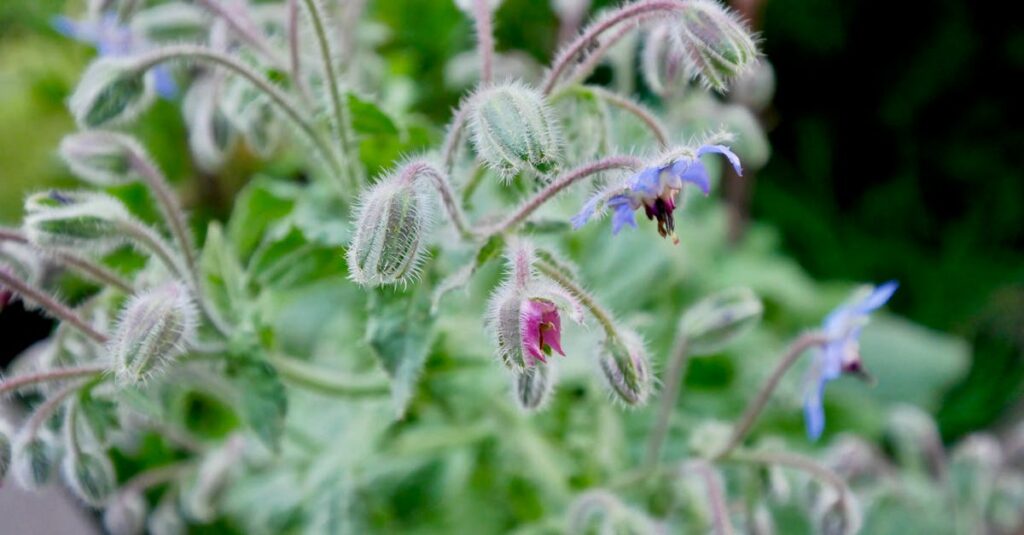
Borage is a fast-growing, drought-tolerant herb that is valued for its edible flowers, pollinator attraction, and soil-improving properties. It thrives in Missouri’s climate and makes an excellent companion plant in vegetable and herb gardens.
1. Plant Overview & Benefits
Scientific Name: Borago officinalis
Common Names: Starflower, Bee Bush, Bugloss
Plant Type: Annual herb (self-seeding, may return yearly)
Sun Exposure: Full sun (6+ hours of direct sunlight)
Soil Preference: Well-drained, average to moderately rich soil
Mature Size: 18-36 inches tall, 12-24 inches wide
USDA Hardiness Zone: Thrives in Zone 6b-7a (reseeds itself each year)
Attracts: Bees, butterflies, and other pollinators
Resists: Deer and rabbits (fuzzy leaves deter browsing)
Why Grow Borage?
- Edible flowers & leaves (cucumber-like flavor)
- Excellent companion plant (repels pests, attracts beneficial insects)
- Improves soil (adds nutrients when used as green manure)
- Medicinal properties (traditionally used for anti-inflammatory effects)
2. Best Planting Time
When to Plant in Missouri:
- Direct Sowing: After last frost, usually mid-to-late April in Missouri.
- Start Indoors: 4-6 weeks before the last frost (early March).
Germination Time:
- Seeds sprout in 7-10 days at 65-75°F.
Tip: Borage has a long taproot, so direct sowing is recommended over transplanting. If started indoors, transplant carefully to avoid disturbing roots.
3. Site Selection & Soil Preparation
Sunlight Requirements:
- Full sun (6+ hours daily) for best flowering and growth.
- Can tolerate partial shade, but will produce fewer flowers.
Soil Preferences:
- Thrives in well-draining soil, but adapts to poor soils.
- Soil pH: 6.0-7.5 (neutral to slightly acidic).
- Does not require heavy fertilization—too much nitrogen leads to excessive leaf growth and fewer flowers.
Tip:
If soil is clay-heavy, amend with compost and sand for better drainage.
4. Planting Instructions
Spacing:
- Sow seeds ¼ to ½ inch deep.
- Space plants 12-18 inches apart to allow for bushy growth.
Transplanting (if started indoors):
- Transplant seedlings carefully when they reach 4-6 inches tall.
- Avoid root disturbance as borage has a deep taproot.
Self-Seeding:
- Borage readily self-seeds, meaning it will return next year if you leave some flowers to go to seed.
5. Watering & Maintenance
Watering Needs:
- Water regularly until established.
- Once mature, borage is drought-tolerant and only needs watering once a week.
- Avoid overwatering—too much moisture can lead to root rot.
Mulching:
- Apply a thin layer of mulch to retain soil moisture and reduce weeds.
- Avoid piling mulch against the base of the plant.
Pruning & Deadheading:
- Deadhead spent flowers to encourage more blooms.
- Cut back leggy plants by ⅓ their height to promote bushy growth.
6. Companion Planting Benefits
Borage is an excellent companion plant that attracts pollinators and repels pests in vegetable and herb gardens.
Good Companion Plants:
Tomatoes – Repels hornworms and improves fruit production.
Strawberries – Enhances fruit flavor and growth.
Cucumbers & Squash – Attracts pollinators for better yields.
Peppers & Eggplants – Deters unwanted pests.
Herbs (Rosemary, Thyme, Basil) – Complements other aromatic herbs.
Avoid planting near:
None – Borage does not negatively affect other plants.
Tip: Chop up borage leaves and use them as mulch or compost to enrich soil with nutrients.
7. Pests & Disease Resistance
Common Pests:
- Very few pest issues!
- May occasionally attract cabbage worms (if planted near brassicas).
Common Diseases:
- Powdery Mildew (can be minimized with good air circulation).
- Root Rot (caused by overwatering or poor drainage).
Disease Prevention Tips:
- Space plants properly to improve airflow.
- Water at the base of the plant, not the leaves.
- Rotate planting areas every year to prevent soil-borne diseases.
8. Harvesting & Uses
Harvesting Leaves & Flowers:
- Leaves: Pick young leaves when they’re tender for fresh use. Older leaves become hairy and less palatable.
- Flowers: Harvest just before full bloom for culinary and medicinal uses.
Uses of Borage:
✔ Culinary Uses:
- Leaves and flowers add a mild cucumber flavor to salads, drinks, and soups.
- Can be candied for desserts.
Medicinal Uses: - Traditionally used for anti-inflammatory benefits.
- Used in teas and herbal remedies.
Garden Benefits: - Soil enrichment (adds nutrients when used as green manure).
- Attracts pollinators to increase vegetable yields.
9. Winter Protection & Overwintering
Will Borage Survive Missouri Winters?
- No, borage is an annual in Zone 6b-7a, but it self-seeds and will return naturally in the spring.
Saving Seeds:
- Allow flowers to fully mature and dry on the plant.
- Collect and store seeds in a cool, dry place for replanting.
- Alternatively, let borage self-seed and it will grow back next year.
10. Missouri-Specific Considerations
Heat Tolerance:
- Borage handles Missouri summers well, but extreme heat (95°F+) may cause it to wilt.
- Provide light afternoon shade if needed.
Late-Season Planting:
- A second planting in late summer (August) can provide fall blooms.
11. Summary of Key Tips
✔ Plant in full sun after the last frost.
✔ Direct sow seeds for best results (taproot dislikes transplanting).
✔ Water sparingly once established—borage is drought-tolerant.
✔ Deadhead flowers to extend the blooming period.
✔ Attracts pollinators and improves vegetable yields.
✔ Self-seeds readily—expect it to return yearly.