Growing cotton in Missouri (Zone 6b-7a) can be a fun and rewarding challenge, especially if you’re aiming to produce cotton for fiber. Cotton thrives in warm climates, but with the right care and attention to the growing season, it’s definitely possible to grow it in your area. Here’s a guide tailored for cotton production in Missouri:
1. Choose the Right Cotton Variety
- Variety Selection: In Missouri’s climate, you should opt for upland cotton (Gossypium hirsutum), which is the most commonly grown cotton variety in temperate regions.
- Shorter Maturity Varieties: Choose a variety that has a shorter growing season since Missouri’s growing season may not be as long as cotton’s preferred subtropical climate. Varieties with a 90-120 day maturation range are ideal.
2. Planting Time
- Warm Soil: Cotton is a heat-loving plant and should be planted once the soil has warmed to 60–65°F (typically after the last frost, around late April to early May in Missouri).
- Frost-free Period: Cotton requires a long frost-free period to mature, typically 160–180 frost-free days. In Missouri, this usually means planting after the last frost date, usually in mid-April to early May.
- You can plant 4–6 weeks after the last frost date to ensure the warm soil temperatures that cotton needs for optimal germination.
3. Site Preparation
- Soil: Cotton prefers well-drained, loamy soil with a slightly acidic to neutral pH (6.0–7.0). If your soil is heavy or clay-like, amend it with compost or organic matter to improve drainage.
- Soil Depth: Cotton requires deep soil, as the roots grow deep. Ensure the soil is tilled to a depth of 8–10 inches.
- Location: Choose a sunny location that receives at least 8 hours of direct sunlight per day. Cotton loves the heat, so a sunny spot is essential.
- Irrigation: While cotton is drought-tolerant once established, it requires a consistent water supply during its early growth stages and flowering. Consider installing a drip irrigation system or hand watering during dry spells.
4. Planting
- Seed Spacing: Space cotton seeds 1–2 inches apart in rows that are 36–48 inches apart (wide enough to allow room for growing cotton plants).
- Planting Depth: Plant cotton seeds ½–1 inch deep into the soil.
- Row Density: Cotton should be planted with adequate space between plants to ensure good airflow and reduce the risk of disease.
- Direct Sowing: Cotton is typically direct sown into the ground, as it doesn’t do well with transplanting.
5. Watering and Maintenance
- Watering Needs: Cotton requires regular watering during the early stages of growth (especially during germination and the first few weeks). After that, it becomes more drought-tolerant.
- Soil Moisture: Keep the soil consistently moist but avoid overwatering, which can cause root rot. A drip irrigation system or soaker hoses are ideal for even watering.
- Weeding: Keep cotton fields free of weeds, especially in the early stages. Use mulch or hand weed to keep the cotton plants from being overshadowed by competing plants.
- Fertilization: Cotton is a nutrient-hungry crop. Apply a balanced fertilizer (such as 10-10-10) at planting time. You may also need to apply nitrogen fertilizer mid-season to encourage healthy leaf growth.
6. Growth Stages and Flowering
- Seedling Stage: After planting, cotton will germinate and sprout within 7–10 days, depending on soil temperature.
- Vegetative Growth: Cotton grows vigorously during the warm months, with the leaves expanding, and the plant growing taller. Ensure adequate moisture during this phase.
- Flowering: Cotton plants will begin to flower in mid-to-late summer (around 60–90 days after planting). The flowers open as yellow, turning to a reddish-pink color before falling off. The cotton bolls start forming after the flowers drop.
- Boll Development: After flowering, the cotton boll (the capsule that holds the cotton fibers) begins to form and mature. This is when you want to make sure the plant is receiving enough nutrients and water.
7. Harvesting
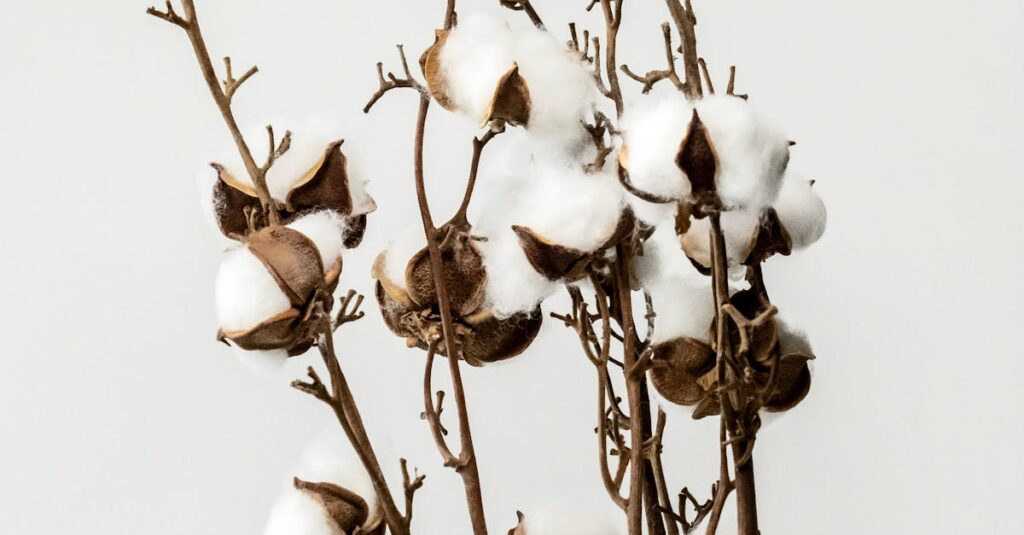
- Mature Cotton: Cotton is ready for harvest once the bolls have split open, revealing the fluffy cotton fibers inside. This happens around 150–180 days after planting, usually in late summer to early fall (mid-September to October).
- Signs of Maturity: The plant will start to turn yellow, and the bolls will open wide, allowing the cotton to be easily picked.
- Manual Harvesting: If you are growing cotton on a small scale, harvesting is typically done by hand. Simply pluck the cotton from the open bolls.
- Machine Harvesting: Larger-scale operations use mechanical harvesters to strip the cotton from the plants.
8. Post-Harvest Processing
- Cotton Ginning: After harvesting, cotton needs to be ginned (separating the cotton fiber from the seeds). You can purchase or rent a cotton gin, or in a small-scale operation, you may need to separate the fibers manually.
- Spinning and Weaving/Felting: Once the cotton is cleaned and ginned, you can spin it into yarn for knitting or weaving, or process it into fibers for felting.
9. Considerations for Missouri’s Climate
- Frost Risk: Missouri has a shorter growing season compared to cotton’s ideal growing conditions, so be mindful of the first frost date in fall. You may need to plan for an early harvest if temperatures begin to drop before the cotton bolls fully open.
- Heat Management: While cotton is a heat-loving plant, Missouri’s summers can sometimes get unpredictable with storms and cooler periods. If the weather gets too cold or wet during the harvest, the cotton bolls could be damaged. Try to harvest before the temperature dips below 50°F at night.
10. Challenges
- Insects and Pests: Cotton is susceptible to pests like aphids, boll weevils, and caterpillars. You may need to monitor and treat with organic insecticides or natural predators.
- Late-Season Cold: In Missouri, an early frost could affect the cotton crop, so plan on harvesting before that risk becomes high. Using row covers or hoop houses can extend the growing season slightly in the fall.
By following these guidelines, you can successfully grow cotton in Missouri and harvest the fibers for use in textiles, crafts, and more. Timing, temperature, and consistent care are crucial for growing cotton in your region, but with proper planning, it can be a very rewarding crop! Let me know if you’d like further details on any step.