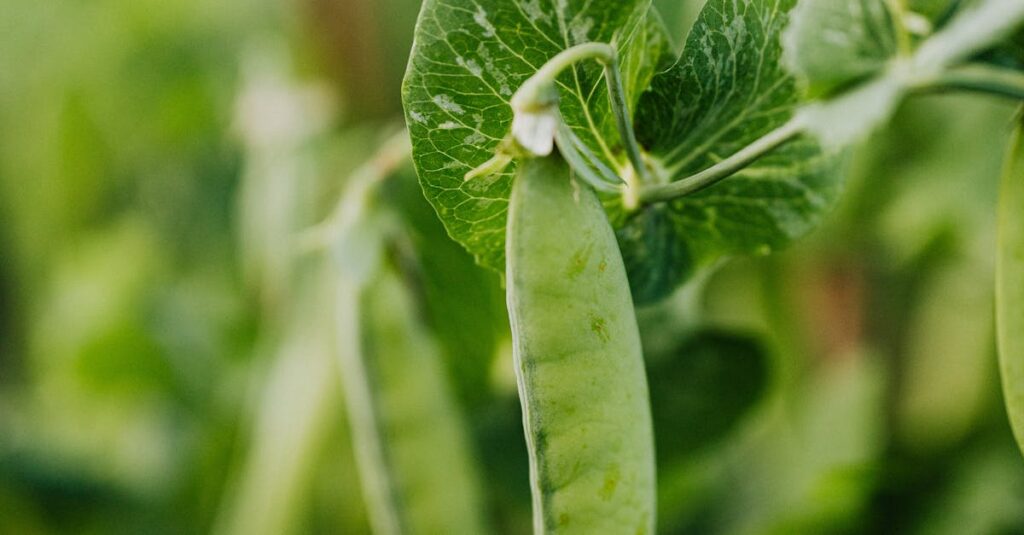
Peas are a cool-season crop that thrives in Missouri’s early spring and fall. They are easy to grow and improve soil health by fixing nitrogen.
1. Choosing the Right Variety
Select a variety based on garden space and desired harvest type:
- Shelling Peas (English Peas) – Require shelling before eating.
- ‘Wando’ – Heat-tolerant, good for late planting.
- ‘Lincoln’ – High yield and disease resistance.
- Snap Peas – Edible pods with sweet flavor.
- ‘Sugar Snap’ – Classic variety, high-yielding.
- ‘Sugar Ann’ – Compact, early-maturing, great for small gardens.
- Snow Peas – Flat, tender pods used in stir-fries.
- ‘Oregon Sugar Pod II’ – Disease-resistant, heavy producer.
- ‘Mammoth Melting’ – Large pods, sweet flavor.
Consider dwarf (bush) or climbing (vining) varieties depending on garden space.
2. Planting Time
- Spring Crop: Direct sow 4–6 weeks before the last frost (Late February to mid-March).
- Fall Crop: Direct sow in late August to early September for a second harvest before frost.
- Soil Temperature: Minimum 40°F, optimal 50–75°F.
- Frost Tolerance: Peas withstand light frosts but stop growing in high heat (above 80°F).
3. Site Preparation
Soil Requirements:
- Well-drained, loamy soil with a pH of 6.0–7.0.
- Avoid waterlogged areas to prevent root rot.
- Peas fix nitrogen, reducing fertilizer needs.
Sunlight Needs:
- Full sun (6–8 hours daily) but tolerate partial shade in hot weather.
Spacing:
- Bush varieties: 2 inches apart in rows 18–24 inches apart.
- Vining varieties: 4–6 inches apart, with trellises 6 feet tall.
- Double-row planting (8–10 inches apart) maximizes space and support.
4. Planting
- Direct Sowing Only: Peas dislike transplanting.
- Plant Seeds:
- Depth: 1 inch deep in cool soil; 1.5 inches deep in warm soil.
- Spacing: 2 inches apart; thin to 4 inches apart if necessary.
- Support: Trellis, stakes, or netting for climbing varieties.
Watering:
- Keep soil evenly moist but not soggy.
- Provide 1 inch of water per week, especially during flowering.
- Mulch helps retain moisture and regulate temperature.
5. Companion Planting
Best Companions:
- Carrots, radishes, turnips – Share space well.
- Lettuce, spinach – Grow well between pea rows.
- Beans, cucumbers, corn – Benefit from nitrogen fixation.
- Marigolds – Deter pests naturally.
Avoid planting near:
- Onions, garlic, leeks – Inhibit pea growth.
- Potatoes – Compete for nutrients.
6. Growth & Pollination
- Self-pollinating – No need for insects.
- Flowering begins about 30–40 days after planting.
- Pods form shortly after flowering, requiring consistent moisture.
7. Pest & Disease Management
Common Pests:
- Aphids: Wash off with water or apply neem oil.
- Pea Weevils: Rotate crops to reduce infestations.
- Cutworms & Slugs: Use diatomaceous earth or handpick pests.
Common Diseases:
- Powdery Mildew: Improve air circulation, avoid overhead watering.
- Root Rot: Plant in well-drained soil, avoid overwatering.
- Pea Mosaic Virus: Use disease-resistant varieties, remove infected plants.
8. Harvesting
Time to Harvest: 50–70 days after planting.
How to Harvest:
- Snap & snow peas: Pick when pods are plump but still tender.
- Shelling peas: Harvest when pods are full and firm but still green.
- Use two hands to avoid damaging vines.
Pro Tip: Frequent harvesting encourages continuous production.
9. Storage & Preservation
Short-Term Storage:
- Refrigerate fresh peas in a perforated bag for 5–7 days.
Long-Term Storage:
- Freezing: Blanch for 1–2 minutes, then freeze.
- Drying: Shell and dry peas for soup stock.
- Canning: Preserve as pickled or pressure-canned peas.
10. Missouri-Specific Considerations
Temperature Sensitivity:
- Heat shortens production. Use shade cloths if planting late.
- In hot springs, plant earlier to avoid early heat waves.
Rain & Soil Drainage:
- Heavy spring rains cause disease & root rot. Raised beds help.
- Use straw or leaf mulch to prevent splashing and soil drying.
Late-Season Planting:
- Missouri’s fall weather is unpredictable. Cover late crops with row covers if early frost is expected.
By following these guidelines, you can successfully grow peas in Zone 6b-7a while minimizing disease and maximizing yields. Let me know if you need additional details!