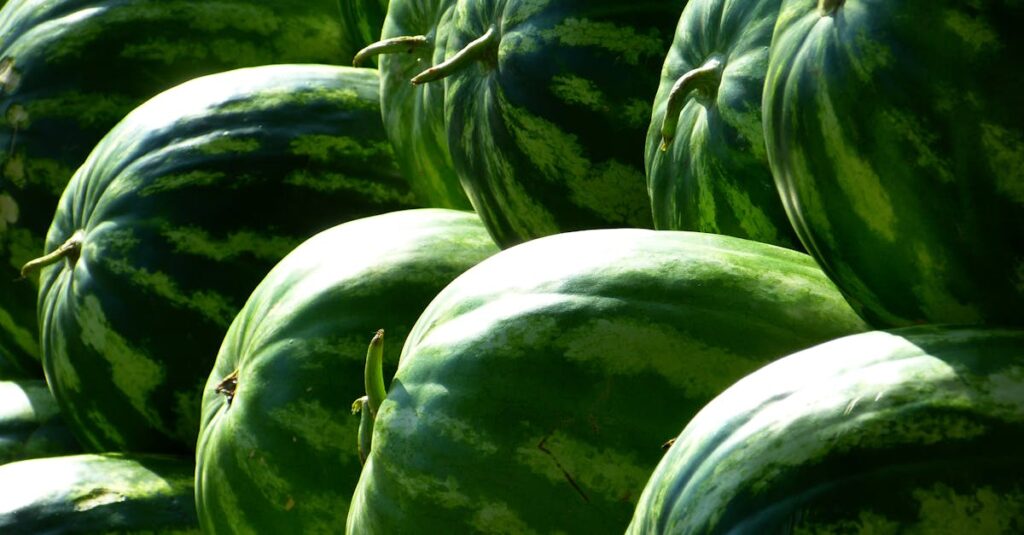
Watermelons (Citrullus lanatus) are a delightful addition to gardens in Missouri’s Zone 6b-7a, offering refreshing fruit during the hot summer months. To ensure a successful watermelon harvest, consider the following guidelines:
- Choosing the Right Variety
- Recommended Varieties for Missouri:
- Seedless Varieties: ‘Vanessa Mini Seedless’ produces small, sweet fruits with dark rinds.
- Seeded Varieties: ‘Allsweet’ and ‘Crimson Sweet’ are popular choices known for their flavor and size.
- Considerations:
- Seedless watermelons require specific pollination conditions; planting both seedless and seeded varieties together can improve fruit set.
- Choose varieties with resistance to common diseases like Fusarium wilt and powdery mildew.
- Recommended Varieties for Missouri:
- Planting Time
- Indoor Sowing:
- Start seeds indoors 4-6 weeks before the last expected frost, typically in late March to early April.
- Transplanting Outdoors:
- After the last frost date, when soil temperatures reach 70°F (21°C), usually mid-May in Missouri.
- Direct Sowing:
- Not recommended; transplanting provides better control over growth conditions.
- Regional Planting Dates:
- North Missouri: Mid-May to early June.
- Central Missouri: Early to mid-May.
- South Missouri: Late April to early May.
- extension.missouri.edu
- Indoor Sowing:
- Site Selection & Soil Preparation
- Sunlight Requirements:
- Full sun exposure (8-10 hours daily) is optimal for vigorous growth and fruit production.
- Soil Requirements:
- Well-drained, sandy loam with a pH of 6.0 to 6.8.
- Incorporate organic matter to enhance fertility and soil structure.
- Soil Testing:
- Conduct a soil test to determine nutrient levels and amend soil accordingly.
- extension.missouri.edu
- Sunlight Requirements:
- Planting Instructions
- Spacing:
- Space plants 36-42 inches apart in rows, with rows 6-8 feet apart to accommodate vine growth.
- How to Plant:
- Create mounds or hills 4-6 feet apart, each with a diameter of 12-18 inches.
- Plant 4-5 seeds per mound, covering with 1 inch of soil.
- Thin to the 2-3 healthiest plants per mound after germination.
- extension.missouri.edu
- Spacing:
- Watering & Maintenance
- Watering Needs:
- Maintain consistent soil moisture, especially during flowering and fruit development.
- Drip irrigation is recommended to keep foliage dry and reduce disease risk.
- Fertilization:
- Apply a balanced fertilizer at planting and side-dress with nitrogen during vine growth.
- Mulching:
- Use mulch to conserve moisture, suppress weeds, and prevent soil-borne diseases from splashing onto plants.
- Watering Needs:
- Companion Planting Benefits
- Good Companions:
- Corn and peas can provide natural support and shade, benefiting watermelon vines.
- Avoid Planting Near:
- Potatoes and other nightshades, as they share common pests and diseases.
- Good Companions:
- Pests & Diseases
- Common Pests:
- Cucumber Beetles: Can transmit bacterial wilt; use insect exclusion screens and monitor with yellow sticky traps. extension.missouri.edu
- Squash Bugs: Remove by hand or use appropriate insecticides.
- Common Diseases:
- Powdery Mildew: Ensure proper spacing for air circulation and apply fungicides as needed.
- Fusarium Wilt: Rotate crops and select resistant varieties.
- Common Pests:
- Harvesting & Uses
- Harvesting:
- Fruits are ready when the underside turns from white to yellow, and the tendril nearest the fruit dries.
- A hollow sound when tapped also indicates ripeness.
- Uses:
- Enjoy fresh, in salads, or as juice.
- Store in a cool, dry place; harvested fruits can last several weeks.
- Harvesting:
- Winter Protection & Overwintering
- Watermelon vines are annuals and do not survive Missouri winters.
- Seed Saving:
- Collect seeds from mature fruits before the first frost.
- Clean, dry, and store in a cool, dry place for planting the following season.
- Missouri-Specific Considerations
- Heat Tolerance:
- Watermelons thrive in heat but may require afternoon shade during extreme heat waves.
- Humidity & Disease Risk:
- High humidity can promote fungal diseases; ensure proper spacing and airflow.
- High Tunnel Production:
- Using high tunnels can extend the growing season and protect fruits from pests.
- Heat Tolerance:
- Summary of Key Tips
- Start seeds indoors in late March to early April.